
5 hr
Delhi City Highlights and Akshardham Temple Experience
- Entry ticket
- Mobile voucher
- Valid same day
- Free cancellation
Delhi Temple Tour — Sacred Shrines & Guided Circuits
Ancient stone, living devotion, one city.
Compare fares, pick the fit — all bookings are mobile-voucher and eligible for free cancellation where shown.
5 hr
5 hr
8 hr
Hand-picked experiences loved by thousands of travelers
4 hours
Free Cancellation
Discover Delhi’s architectural wonders and historical landmarks on this 4-hour private excursion by air-conditioned car.
6 hours
Free Cancellation
Explore Delhi's iconic temples and vibrant streets on this 6-hour private guided journey.
7 - 8 hours
Free Cancellation
Experience the best of Old and New Delhi with a private guide, featuring the Red Fort, Akshardham, and a thrilling rickshaw ride.
Gather at the Central Reservation Office at Baba Kharak Singh Marg to meet your guide and board the tour vehicle.
Explore the Laxminarayan Temple, a multi-tiered Hindu shrine built in 1938, featuring red sandstone architecture and dedicated to Vishnu and Lakshmi.
Experience the peaceful atmosphere at this famous Sikh house of worship, view the sacred Sarovar pool, and observe the community kitchen.
Walk through the gardens of the Bahai House of Worship and sit inside the silent, flower-shaped white marble sanctuary.
Tour the sprawling 70-acre temple complex dedicated to Goddess Katyayani, showcasing a blend of North and South Indian temple architectures.
Built in 1938 by the Birla family, this shrine features red sandstone carvings and houses idols of Lakshmi and Narayan. Visitors can explore the side shrines dedicated to Shiva and Buddha, adorned with traditional frescos.
The Bahai House of Worship features 27 free-standing marble petals arranged in clusters of three to form nine doors. The central hall stands 34 meters tall and accommodates up to 2500 people in complete silence.
A massive holy pool where devotees take a dip, believed to possess healing properties. The surrounding white marble courtyard is flanked by golden domes and colonnaded galleries.
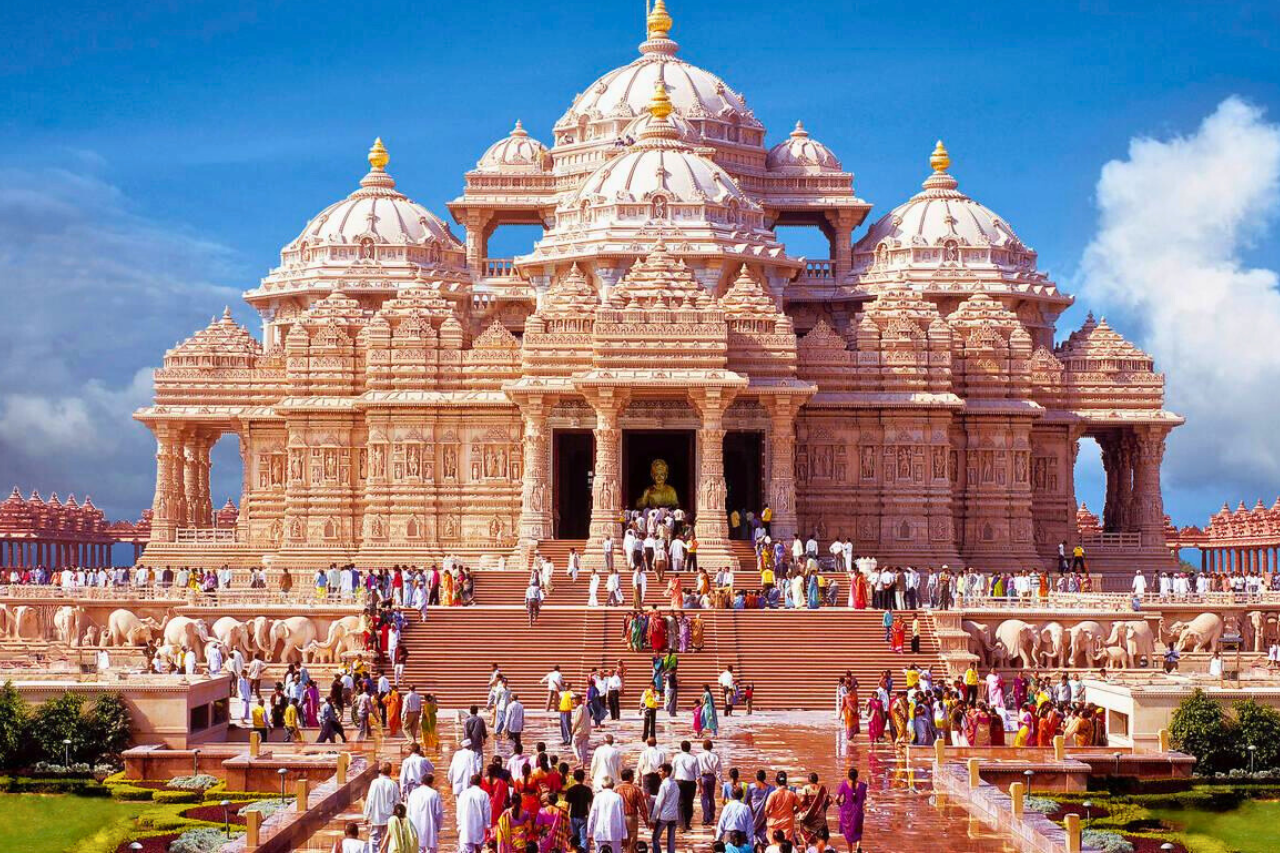
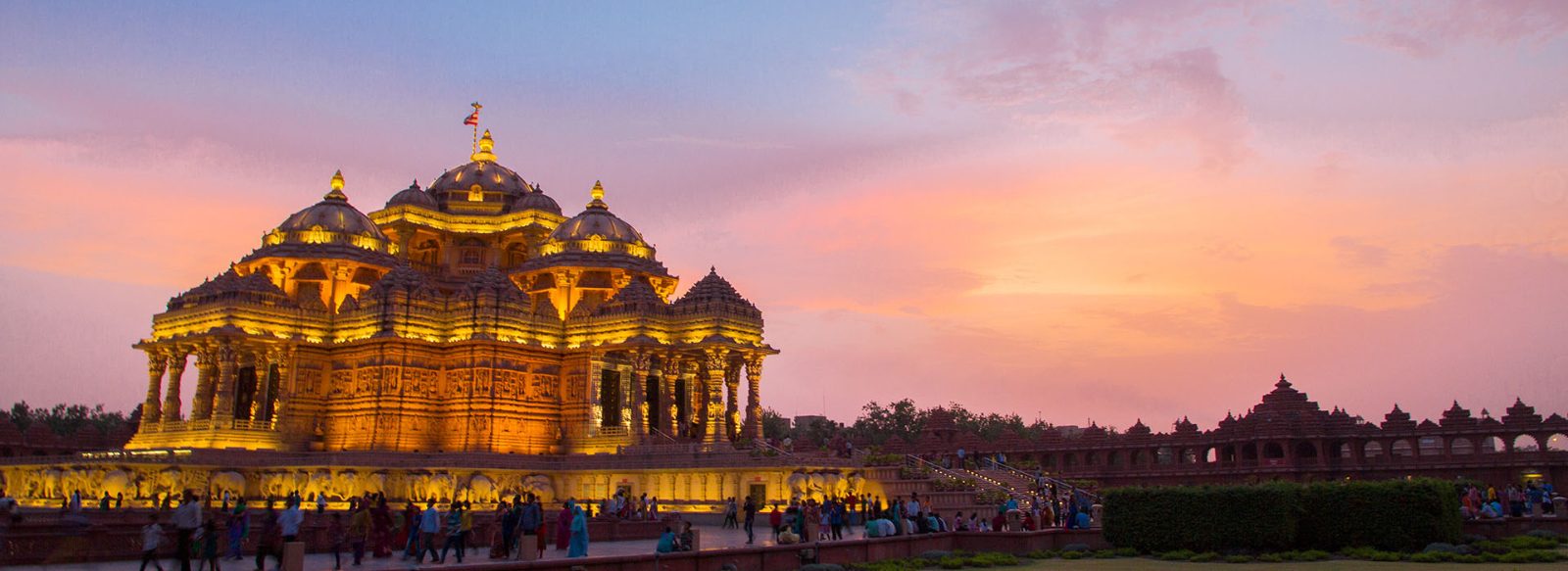
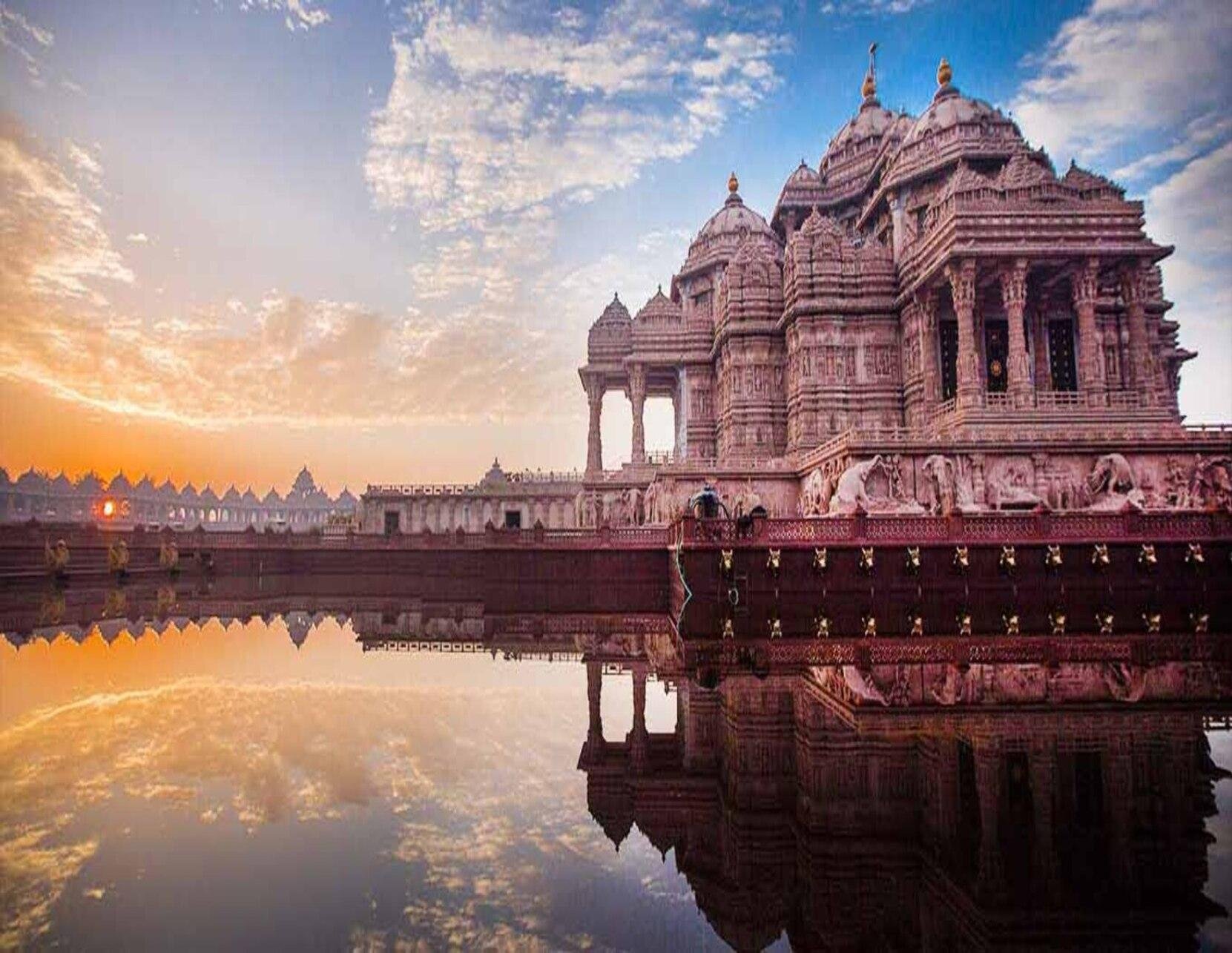
Carved from pink sandstone and Italian Carrara marble, this central monument features 20,000 statues and 234 ornate pillars. It stands 43 meters high and showcases scenes from Indian history.
The main sanctuary of the complex is dedicated to Goddess Katyayani and opens only during the bi-annual Navratri festival. It features massive silver-plated doors and a golden idol of the deity.
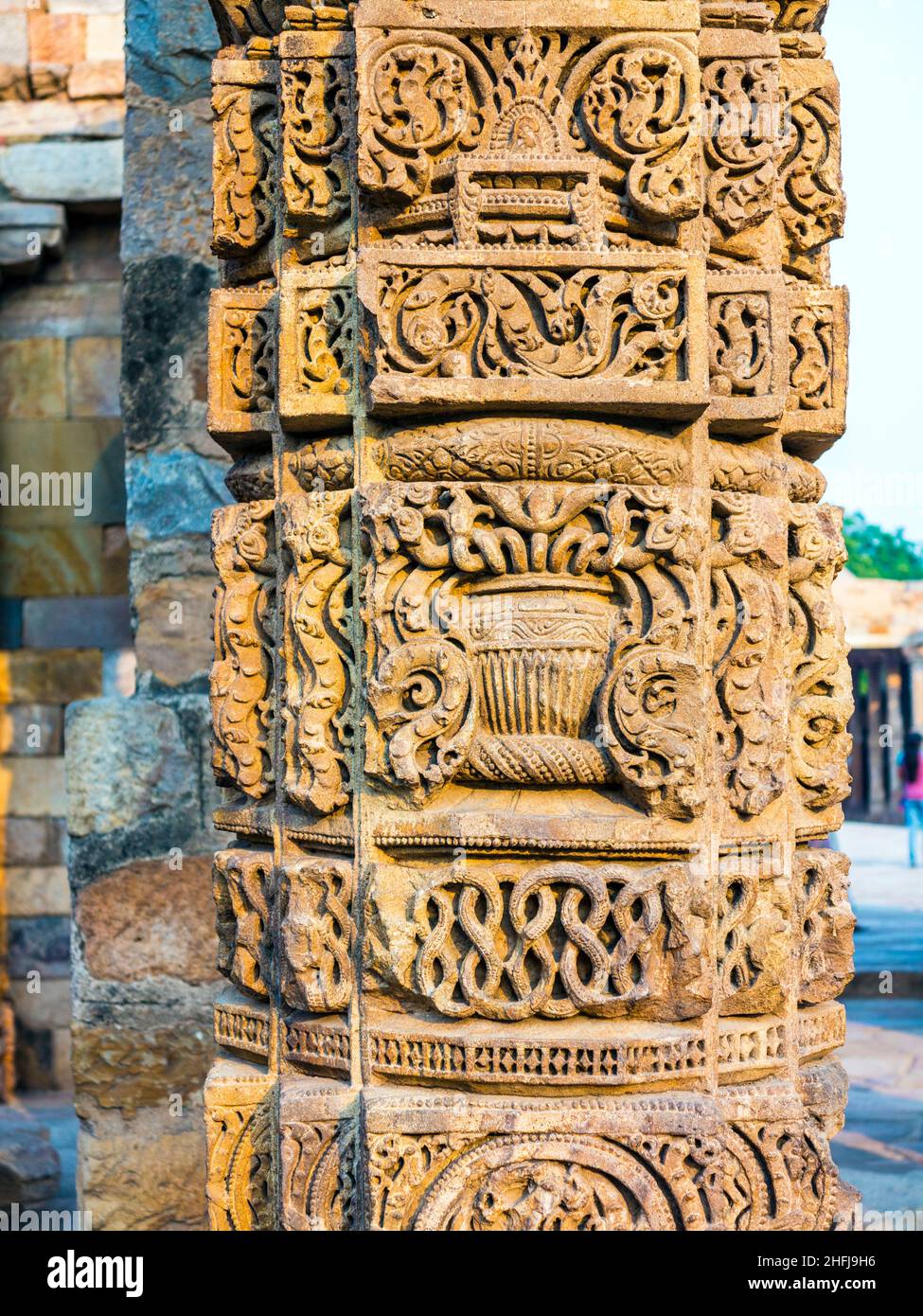
You arrive at the Central Reservation Office on Baba Kharak Singh Marg before 09:30, early enough to collect your materials and step out while the morning light is still low and directional. The forecourts are quieter at this hour — vendors arranging marigold garlands, priests completing the first aarti of the day — and you move through them without the press of midday crowds. At each site, you remove your footwear at the entrance threshold and feel the cool stone underfoot. Inside the mandapa, your guide pauses at the carved pillars to trace the iconography — the river goddesses Ganga and Yamuna flanking a doorway, the celestial dancers frozen mid-step in sandstone. You count 234 pillars at one complex alone. Incense hangs in the inner sanctum and the bell overhead is struck by each worshipper who passes beneath it. By 11:00 you have visited three shrines and the heat is beginning to build, exactly why the recommended arrival window of 09:00 to 11:00 matters on a day like this. You pause in a shaded courtyard, watching the rangoli pattern on the forecourt floor being refreshed in powdered colour. By the time your delhi temple tour concludes in the early afternoon, you carry with you a concrete sense of how devotional architecture in this city has accumulated across centuries — not as museum pieces, but as places still actively used and renewed each morning.
All the details about your upcoming adventure in one place
A delhi temple tour immerses you in the capital's most revered spiritual landmarks, from the marble serenity of Birla Mandir to the soaring shikhara of Laxminarayan Temple. Delhi temple tour tickets grant access to centuries of devotion and craftsmanship, with expert guides explaining iconography, ritual practice, and the significance of prasad offerings at each site. Whether you join one of the guided Delhi mandir tours or explore via a self-paced sacred-sites itinerary, delhi temple tour tours are structured to balance quiet contemplation with rich cultural context.
Delhi holds more than a thousand places of worship within its boundaries, and no single walk through the capital captures the city's spiritual layering more directly than a delhi temple tour. The oldest of these sites predate the Mughal era by centuries, their foundation stones laid when the city bore names — Indraprastha, Lal Kot, Siri — that survive today only in archaeology and epic verse. The significance of this circuit extends well beyond religious observance. Each shrine in the tour represents a distinct architectural tradition. The Birla Mandir, completed in 1938 after two decades of construction, was built entirely from Rajasthani marble and inaugurated by Mahatma Gandhi on the condition that it remain open to worshippers of all castes — a pointed statement at a politically charged moment. Across the city, the Chattarpur Temple complex, one of the largest in Asia by area, spreads across more than 70 acres of South Delhi and draws hundreds of thousands of pilgrims annually for the Navratri festival. The Akshardham complex on the Yamuna's eastern bank, consecrated in 2005, incorporates 234 ornately carved pillars and a central monument clad in Rajasthani pink sandstone and Italian marble, its surface detailed with more than 20,000 individual sculptures of flora, fauna, and divine figures. What distinguishes these shrines architecturally is the continuity of craft. Stonecutters and inlay workers employed techniques passed down through guild traditions, making the temples living repositories of Indian decorative arts as much as centres of puja and aarti. The carved shikhara spires, the mandapa columns worn smooth by generations of worshippers, and the rangoli patterns freshened daily on forecourt floors all constitute a vernacular visual language that rewards close attention. Today the delhi temple tour draws visitors seeking both spiritual encounter and architectural study. Entry to all major temples on the circuit remains free, making this one of the few comprehensive cultural itineraries in any major world city that carries no admission cost. Tours depart from the Central Reservation Office on Baba Kharak Singh Marg, Connaught Place, and are open Tuesday through Sunday from 09:00 to 17:00. Monday closures allow staff to conduct maintenance and ceremonial cleaning across participating sites.
Entry to all major temples on the circuit remains free — one of the few comprehensive cultural itineraries in any major world city that carries no admission cost.
Modest clothing covering shoulders and knees is mandatory for the delhi temple tour. Loose attire is recommended to cope with the Delhi heat, and visiting local spiritual monuments requires respectful behaviour.
Airport-style security checkpoints operate at Swaminarayan Akshardham and Lotus Temple. Large suitcases are not permitted, but lockers are available at the main gates for storing items before entry.
Photography is strictly forbidden inside the main sanctums of Birla Mandir, Akshardham, and Gurudwara Bangla Sahib. Visitors can take outdoor architectural shots at the Bahai House of Worship gardens, provided they respect the quiet zones.
Families joining the delhi temple tour will find shoe storage counters and gardens at most stops. Keep children close during peak morning hours at the crowded Gurudwara Bangla Sahib pool.
The physical layout of the ancient architecture on the delhi temple tour presents some barriers. Major sites like Lotus Temple have wheelchair ramps, but visitors must leave wheelchairs at shoe-deposit points before entering some inner sanctuaries.
Outside food and drinks may not be brought along during the delhi temple tour. Free communal meals are available at Gurudwara Bangla Sahib, and mineral water bottles should be kept inside daypacks until exiting the temples.
Weekly closure day
Quietest weekday morning
Moderate crowd levels
Ideal for mid-week sightseeing
Slightly busier afternoon
Heavy weekend traffic
Weekend peak crowd levels
Opening Hours
Tue–Sun 09:00–17:00 (Mon Closed)
Meeting Point
Central Reservation Office, Baba Kharak Singh Marg, Connaught Place, New Delhi, Delhi 110001, India (Delhi sacred places route starting point)
Best Arrival Window
09:00–11:00
Accessibility
Partial access at main temple premises
Official Portal
https://delhitourism.gov.in
Public transport · 5 mins walk from metro · Under 50 INR
Take the Delhi Metro Blue Line or Yellow Line to Rajiv Chowk Station in Connaught Place. From Rajiv Chowk, the Central Reservation Office on Baba Kharak Singh Marg is a short 5-minute walk.
Taxi · 15-30 mins depending on traffic · 150 - 300 INR
Book an app-based cab like Uber or Ola directly to Baba Kharak Singh Marg. Drivers can drop you off directly in front of the DTTDC office near the Coffee Home.
Car · 20-40 mins from Central Delhi · 100 INR parking fee
Drive to Connaught Place and park at the designated municipal parking lots on Baba Kharak Singh Marg. Spaces are limited, especially during business hours, so early arrival is advised.
The general entrance fee is 0 INR (Free entry to all major temples on the tour) so no cancellation fees apply. Standard guided transport bookings can be cancelled for a full refund up to 24 hours prior to departure.
Recommended time
6 to 8 hours
Booking a comprehensive delhi temple tour is the best way to navigate New Delhi spiritual landmarks and visit places like the Lotus Temple without transport stress. While standard delhi temple tour tours cover the major venues, mandatory security checkpoints and bag drops can add 30 to 45 minutes to your schedule at each stop during peak afternoon hours. Fortunately, because general entry is completely free to all major temples on the tour, you will bypass ticketing lines entirely. This means you never need to worry about reserving delhi temple tour tickets in advance, saving both money and booking hassle. However, visitors should still plan their vehicle pickup points carefully to avoid the worst of Delhi's midday traffic congestion. Finally, if your afternoon delhi temple tour tour stops include highly popular sites like ISKCON or Akshardham, be sure to allocate extra transit times and prepare for extended darshan lines.
Crowd levels through the day
Weather · crowds · average price — dots go green to amber to red as each metric rises.
The weather during autumn is ideal, with pleasant temperatures ranging from 15°C to 28°C. This period coincides with major Hindu festivals like Diwali and Dussehra, making the temple decorations vibrant. Crowds are high, so early morning departures are necessary.
Winters in Delhi bring cool, crisp air and daytime temperatures between 10°C and 22°C. Morning fog may delay transit, but walking through the temple gardens is comfortable. Bring a light jacket for the open-air courtyards.
Spring offers warm, sunny days averaging 25°C, with beautiful floral displays in the gardens of the Bahai House of Worship. This is the last comfortable month before the intense summer heat begins. Crowd sizes remain moderate during weekdays.
Delhi summers are extremely hot, with temperatures frequently exceeding 40°C. Visiting during the recommended 09:00–11:00 window is crucial to avoid walking barefoot on scorching marble tiles. Many temples have carpet runners to protect feet.
You will be removing your footwear constantly when entering the sacred shrine spaces on the delhi temple tour. Wearing simple slip-on shoes or sandals saves considerable time and hassle at deposit counters.
Sikh shrines like Gurudwara Bangla Sahib require all visitors to cover their heads before entering. Bring a clean scarf or handkerchief, though free head coverings are available at the entrance if needed.
The Bahai House of Worship, also known as the Lotus Temple, maintains strict silence inside its main hall. Avoid speaking or whispering to preserve the meditative environment.
During spring and summer, the outdoor marble courtyards of Birla Mandir and Chattarpur Temple can become extremely hot. Keep your socks on where permitted to protect your feet from burns.
Only book your transport or guide services at the official DTTDC Central Reservation Office to prevent overcharging. Official guides will clearly display their government-issued ID badges.
Certain locations, such as Swaminarayan Akshardham, do not allow any electronic devices inside the gates. Ensure you leave your phone at the secure deposit locker at the entrance.
Central Reservation Office, Baba Kharak Singh Marg, Connaught Place, New Delhi, Delhi 110001, India
The official departure point for the DTTDC-guided delhi temple tour, located near the Coffee Home.
Get directionsDelhi's sacred landscape is a layered archive of devotion, politics, and architecture spanning four centuries. The oldest anchor of any delhi temple tour is Gurudwara Bangla Sahib, built on the site where the eighth Sikh Guru, Har Krishan, stayed in 1664 during a smallpox epidemic that swept through Mughal Delhi. The young Guru tended the sick, drawing water from a tank still revered today; after his death at age eight, the site passed through several custodians before Raja Jai Singh of Amber erected a formal structure in the early 18th century. The gilded dome visible from Connaught Place dates to 20th-century renovations and is now one of the capital's most recognisable silhouettes. Birla Mandir, formally the Lakshmi Narayan Temple, introduces an entirely different current in India's spiritual history. Industrialist Jugal Kishore Birla commissioned the sandstone complex in 1933, and Mahatma Gandhi consecrated it in 1939 on the explicit condition that worshippers of all castes and creeds be permitted entry — a deliberate act of social reform embedded in the temple's foundation. The carved stone screens and terraced gardens were designed by architect Sris Chandra Chatterjee, blending Orissan shikhara forms with Rajput detail. The second half of the 20th century brought two structures that reframed what a mandir visitation could mean in engineering terms. The Lotus Temple, completed in 1986 to designs by Iranian-Canadian architect Fariborz Sahba, required pouring nearly 800 tonnes of reinforced concrete to achieve its 27 free-standing marble-clad petals. It serves the Baháʼí faith and holds no idols, relying instead on silence as liturgy. Akshardham, opened in 2005, assembles more than 20,000 carved figures across 234 ornately sculpted pillars — all in pink Rajasthani sandstone quarried and hand-carved by a volunteer corps of craftspeople over a decade. Together these four sites make the delhi temple tour one of the most architecturally diverse sacred circuits in South Asia, moving from Mughal-era compassion to post-Independence pluralism within a few kilometres of each other.
Guru Har Krishan arrives at the site of present-day Bangla Sahib and ministers to Delhi's smallpox-afflicted population.
Raja Jai Singh of Amber constructs a formal shrine over the sacred tank, establishing the gurudwara's architectural foundation.
Gandhi consecrates Birla Mandir with a condition of caste-open entry, linking the Lakshmi Narayan Temple to the social-reform movement.
The Baháʼí House of Worship — the Lotus Temple — opens after engineer Flint & Neill resolves the structural challenge of 27 self-supporting concrete petals clad in white marble.
Akshardham is inaugurated, setting a Guinness record for the world's largest comprehensive Hindu temple and showcasing a decade of volunteer stone-carving.
Taking kids on a delhi temple tour is rewarding but requires preparation. Many sites involve long walks and shoe-free zones, making kid-friendly pacing essential.
Prams are rarely allowed in prayer halls or on steps. Leave strollers at shoe counters and use baby carriers instead.
Many delhi temple tour tours cover several locations, but families should limit visits to two sites to prevent fatigue. As entry is free, you do not need delhi temple tour tickets, keeping the schedule flexible.
Traditional temples lack dedicated diaper-changing stations. Carry a portable changing mat and use your vehicle or nearby lawns for quick changes.
Strict security checks ban large bags and toys. To keep kids engaged on your delhi temple tour tour, point out the animal carvings and vibrant paintings since playthings must be left behind.
Utilize the best arrival window of 09:00–11:00 to avoid heavy afternoon traffic and high mid-day temperatures.
Taking a delhi temple tour offers a wonderful chance to experience the culinary heritage of Delhi spiritual landmarks. Authentic vegetarian dining and community kitchens are conveniently located directly at or near the main stops.
Located near the starting hub on Baba Kharak Singh Marg. This site is popular during a delhi temple tour tour for its quick South Indian snacks like masala dosa and authentic filter coffee.
This pure vegetarian venue inside the complex serves delicious North and South Indian dishes prepared without onion or garlic. It is a favorite stop on delhi temple tour tours for chole tikki.
Experience the traditional community kitchen serving daily meals of dal, chapati, and kheer to all visitors. Since entry is free, you do not need to buy delhi temple tour tickets beforehand.
Real experiences from real travelers
The delhi temple tour we joined on a quiet Tuesday morning was genuinely peaceful — the guide walked us through four major shrines before 10 a.m., and the marble underfoot was still cool from the night air. Akshardham's carved sandstone panels are on a scale you simply cannot appreciate from photographs. I would recommend arriving right at opening time to beat the summer heat.
We booked delhi temple tour tickets the evening before and had no trouble getting a spot on the next morning's small-group round. The golden light hitting the shikhara spires just before sunset was exactly the kind of sensory reward that makes travel worthwhile. Our guide explained the Vaishnavite iconography on every panel, which added real depth to what could otherwise be a quick walk-through.
The mandir bells were ringing as we arrived and the sound carried across the entire courtyard — it set the atmosphere immediately. As part of a structured Delhi sacred sites excursion, this tour covered Birla Mandir and the Gauri Shankar Temple in Old Delhi, giving a genuine contrast between old and new architecture. I appreciated that the guide kept the group moving at a comfortable pace without rushing the prayer moments.
We visited on a Saturday as part of a delhi temple tour and the queues at Akshardham were noticeably long by mid-morning. The guided commentary was excellent and covered the Swaminarayan tradition in accessible terms. A weekday visit would likely be a more relaxed experience, especially during peak summer.
A half-day mandir darshan walkthrough of three temples in South Delhi left us with a clear sense of how different Hindu traditions coexist in the same city. The guide's knowledge of puja rituals was impressive and he answered every question without making anyone feel rushed. The flower market near Birla Mandir, which we passed on the way out, was an unexpected highlight.
The delhi temple tour covered both the meditative stillness of the Lotus Temple and the elaborate iconographic richness of Akshardham in a single morning, which gave a real sense of Delhi's religious diversity. Bare feet on cold marble, the smell of jasmine garlands, and the sound of Sanskrit chanting overhead — the sensory experience is layered in a way that no guidebook fully conveys. I bought delhi temple tour tickets directly through the operator's website and the booking was seamless.
The lane through Chandni Chowk leading to the Gauri Shankar Temple was narrow and busy even at 8 a.m., and that chaos makes the calm inside feel even more pronounced. As part of a comprehensive Delhi mandir pilgrimage route, the guide contextualised each temple within its neighborhood history, which I found more engaging than a purely architectural commentary. Bring a small bag — larger items must be checked at the entrance counter.
Delhi temple tour tours that combine Old and New Delhi shrines in a single itinerary are rare, and this one executed the balance well. The Jhandewalan Devi Temple at dawn, with incense haze still hanging in the air and pigeons circling the courtyard, was a genuinely atmospheric moment. The group was small — eight people — which meant the guide could tailor the stops to our interests.
As someone who visits Delhi regularly for work, I joined a delhi temple tour tours group to finally see sites I had always bypassed. The Akshardham water show tickets are sold separately and I wish the booking confirmation had made that clearer. The temple complex itself is extraordinary in scale — the main monument's carved facade stretches further than you expect when you first step onto the esplanade.
The guided Hindu temple circuit in Delhi was the highlight of a week-long India trip, and I say that as someone with no prior connection to Hindu traditions. The guide explained the symbolism of each deity's posture and attributes with patience and warmth, and the brass lamp ceremony at dusk inside Birla Mandir made the whole visit feel complete. I came back the next day on my own, which is probably the best recommendation I can give.
Everything you need to know for your journey
The Delhi Temple Tour route operates Tuesday through Sunday from 09:00 to 17:00. Please note that the official operations are closed on Mondays.
The general entrance fee is 0 INR (Free entry to all major temples on the tour). You do not need to purchase tickets for entering the spiritual sites.
Modest clothes covering shoulders and knees are required. Visitors must remove their shoes at the designated counters before entering the shrines.
Interior photography is strictly prohibited inside the main halls of Akshardham Temple and Birla Mandir. However, you can photograph the outer architecture and gardens during your Delhi Temple Tour.
Autumn and winter, spanning from October to March, are the ideal periods. The weather during these months is pleasant, avoiding the severe summer heat on your Delhi Temple Tour.
Large bags are not permitted inside the temple complexes. You can store your small personal daypacks in the locker facilities near the entrances during the Delhi Temple Tour.
Major locations like the Bahai House of Worship have paved pathways and ramps. However, some ancient temple structures involve steps and have limited wheelchair access.
Outside food and drinks are not allowed inside the sacred grounds. Visitors can consume communal meals in the dedicated langar halls during the Delhi Temple Tour.
The office is at Central Reservation Office, Baba Kharak Singh Marg, Connaught Place, New Delhi, Delhi 110001, India. You can take the Delhi Metro to Rajiv Chowk Station and walk.
Yes, the Delhi Temple Tour is family-friendly, featuring wide gardens and educational sites. Parents should supervise children closely around busy temple pools and shoe counters.
An astronomical observatory built in 1724 by Maharaja Jai Singh II of Jaipur, featuring 13 architectural astronomy instruments.
An ancient temple dedicated to Lord Hanuman, known for its continuous chanting of the mantra since 1964.
A prominent Sikh shrine featuring a golden dome and a large pool believed to contain medicinal waters.
A lush green public park situated at the center of the Connaught Place market circle, featuring a massive national flag.
A heritage hotel dating back to the British Raj, featuring art deco style, spacious gardens, and upscale dining rooms.
A modern hotel located in the outer circle of Connaught Place, offering comfortable rooms and easy access to metro stations.
An affordable hostel option near Baba Kharak Singh Marg, suitable for backpackers looking for basic amenities and transport links.
Join thousands of happy travelers who have discovered this incredible experience
Book Your Experience Now